MUSIC FOR NEW BODIES
MUSIC FOR NEW BODIES
Music by Matthew Aucoin*
Text based on poems by Jorie Graham, assembled by Matthew Aucoin and Peter Sellars
Stage Direction by Peter Sellars
Lighting Design Ben Zamora
Assistant Director Yibin Wang
Production Stage Manager Betsy Ayer
Costume Stylist Victoria Bek
High Soprano Song Hee Lee
Soprano Lauren Randolph
Mezzo Megan Moore
Tenor Daniel McGrew
Bass-Baritone Will Socolof
Sandbox Percussion Jonny Allen*, Victor Caccese, Terry Sweeney
Percussion Cover Jeffrey Stern
Flute Emi Ferguson* and Hunter O’Brien
Clarinet Yasmina Spiegelberg
Oboe Joe Jordan
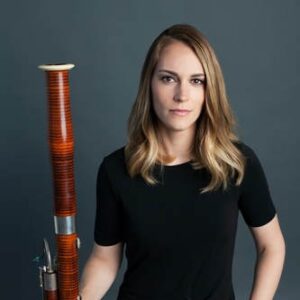
Bassoon Kara LaMoure
Violin Miranda Cuckson* and Rachel Lee Priday
Viola Carrie Frey
Cello Iva Casian-Lakos and Jesse Christeson
Bass Maggie Cox
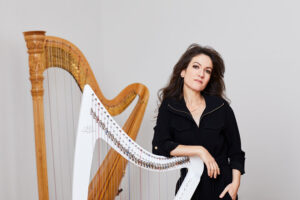
Harp Jacqueline Kerrod
Piano Baron Fenwick
Keyboard Ning Yu
Conductor Matthew Aucoin
* AMOC* Company Member
The American Modern Opera Company’s appearance, including Music for New Bodies, is generously supported by Katie and Paul Buttenwieser.
Music for New Bodies is a co-commission of American Modern Opera Company (AMOC*), DACAMERA, Los Angeles Opera, the Shepherd School of Music at Rice University, and the Aspen Music Festival and School. Foundational residency support for the development of Music for New Bodies was provided by Brown Arts Institute at Brown University.
By arrangement with Associated Music Publishers, Inc., publisher and copyright owner.
Special thanks to Avery Willis Hoffman, Jessica Wasilewski, Joshua Bristow, Ian Driver, Lincoln Center for the Performing Arts, and THE OFFICE performing arts + film.
AMOC*
Artistic Director Zack Winokur
Co-Founder Matthew Aucoin
Director of Investment Strategy Courtney Beck
Operations Manager Shelby Blezinger-McCay
Company Manager Ryan Gedrich
Senior Advisor Jennifer Chen
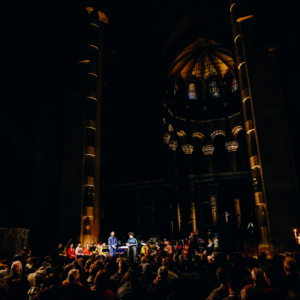
Premiered December 2018 at The Met Cloisters, Fuentidueña Apse, New York, NY
Production photos by Nina Westervelt
Program note by Matthew Aucoin
To be alive today is to be overwhelmed. We are overwhelmed every day by the gap between what we know and what we’re capable of feeling. We know too much: we know that the planet is warming and frequently afire; we know that millions of people around the world are suffering as a result of unnecessary wars and preventable famines—but how can we let ourselves feel everything we know without simply giving in to despair?
The poetry of Jorie Graham is singularly capable of gathering together these irreconcilable scales of existence: the global and the personal, the cosmic and the mundane. In Graham’s recent poems, a depiction of the ravages of chemotherapy can transform in an instant into an image of the destruction that human beings have unleashed on the ocean floor through decades of pollution. And as technological advances have made it possible for us to live life almost entirely in virtual spaces, Graham has insistently asked the question of what it is about physical, embodied life that’s worth defending.
One of music’s great gifts is simultaneity: multiple contradictory experiences can be gathered together, in a piece of music, into something coherent and even beautiful. Music is also capable of making the unbearable bearable—and not only bearable, but joyous. Graham’s poetry, with its utopian syntheses of every imaginable kind of earthly experience, struck me as irresistible material for an equally utopian musical work.
The result is Music for New Bodies, a piece that might be called a vocal symphony, or an opera with only the ghost of a narrative. It’s a 70-minute work for five singers, an instrumental ensemble of eighteen players, and electronics.
This is a polyvocal piece, in every sense of the word: the five singers sing in many voices, not all of them human. There is a central “speaker,” or protagonist: a person who has just received an aggressive medical diagnosis. At different moments in the piece, all five singers portray that central speaker; sometimes all five of them portray her at once. But that speaker’s consciousness is frequently invaded by other voices: the voices of the medicines flowing through her veins; the voices of surgeons and other medical personnel; the untrustworthy voices of chatbots and AI-generated presences; and, at the other end of the spectrum, voices from deep within the planet—the voice of the earth’s core, the voice of the Mariana Trench.
Throughout the piece’s composition, as I assembled the text, I regularly called my beloved collaborator and friend Peter Sellars, who directed this staging of the piece and who had invaluable ideas along the way about the piece’s libretto. Peter has also been present for every workshop and every concert performance of the piece so far, and his presence has added an incomparable intensity to the very fabric of the piece.
The sound engineer Kyle Joseph and I worked together to create the electronic elements, and Kyle was a crucial partner in bringing that aspect of this composition to life.
And finally, I am so grateful that I’m able to perform this piece with an ensemble of friends, the brilliant and fearless artists who make up AMOC* (American Modern Opera Company).
Music for New Bodies: Synopsis/Guide
1. Cryo
Music for New Bodies begins in a moment of crisis, of spiritual freefall. The first movement, “Cryo,” features a speaker reckoning with one of those dubious, provisional immortalities—such as cryonics—that are now available to those with the money and the desire. This movement seems to take place in the immediate aftermath of a dreaded diagnosis: “The bad news became apparent too late.” The passage of time, the way one has been living one’s life day to day—all these things suddenly seem to have lost their meaning.
And though the speaker is unnerved by the idea of preserving one’s body in the hope of future resurrection, she can’t help but reflect on what it means for human beings that such a step can now be considered. She is on the verge of embarking on “a long stilling voyage,” a journey whose destination is unknowable. “I have no idea what is retained,” the singers intone. “What is here is certainly not there.”
The music of this movement jumps unpredictably between different material: the speaker is in a state of dissociation; she is unable to confront the full implications of the step she’s about to take. Speech emerges in fragments. The mood toggles between frozenness, panic, a kind of wild lashing-out, and moments of painful clarity. At times, the five singers speak in a desperate, blurted unison; at other times, their lines fracture and scatter.
Near the end of the movement, something mysterious happens: the speaker’s words fuse with those of the medieval mystic Julian of Norwich, whose scaldingly powerful vision of Jesus on the cross are overlaid with the speaker’s contemporary attempt to attain a very different form of life after death.
2. I [know myself]
The second movement, “I [know myself],” is a brief, frightening snapshot of another destabilizing experience: the speaker looks in the mirror and does not recognize what she sees there. This movement is a fierce attempt to remain grounded, to locate oneself, even as the speaker stares and stares and feels less and less sure of her own bodily existence. The music features a quiet yet implacable pulse, a kind of heartbeat of oblivion, out of which erratic, almost fast-forwarded instrumental figures emerge.
3. Deep Water Trawling
This movement departs from the human world, visiting the most distant and unknowable realm on our planet: the very bottom of the ocean.
In the first part of the movement, the five singers embody some deep-sea presence—maybe they’re deep-water fish, or maybe they’re the voice of the sea floor itself—speaking up to humanity, telling us about the unimaginable violence we’ve unleashed through pollution and ghostfishing. An electronic pulse, like a ship’s rotating propeller, dominates the texture. The messages that these deep-sea beings have for us aren’t exactly encouraging: “there is nothing in particular you want—you just want,” they say. That phrase, “you just want,” builds and builds, like a burgeoning pile of toxic waste, to a pulverizing musical climax.
The second half of the movement, which begins with the line “Ask us anything,” is a dialogue between an oracular deep-sea presence (portrayed by the mezzo-soprano) and a group of human “questioners” (the other four singers). This spirit of the deep is a kind of modern-day Erda, and like Erda, she has frightening truths to tell us.
4. Prying / Dis-
The bottom of the ocean, with its dim light, transforms into an operating room in a hospital. The speaker is about to undergo an intense operation, one that may save her, but from which she might not return alive. The movement begins with the ambient sounds of a hospital’s daily routine—”anesthesiologists back from coffee break”—and the inexorable preparatory steps before the operation begins: “the guidewires in, the intravenous ports, the drip begun.”
The speaker reflects on the fact that she will soon be literally opened up and examined: “They will learn everything about me while I sleep.” In these moments of preparation, she experiences violent, shuddering shifts in emotion: she lashes out, she wonders whether this is worth even trying—and finally she accedes, relaxes, and gives herself over to the journey that awaits her. The music of her encounter with “the machine reading me out” is unexpectedly lush, ecstatic, even erotic.
As the drugs have their effect and she descends “down through this operating theater’s novocaine-green gleam,” we enter a hallucinatory, almost psychedelic realm: the singers seem to give voice to the drugs themselves as they pass through her veins. The music takes on a strange, synthetic sweetness, like an aural manifestation of the seductive, not entirely human voice of a medical corporation.
After the operation, there is a blackout, a desolate instrumental section, devoid of life. And yet the patient has survived. She slowly wakes up, hears the world outside, and steps out of the hospital into the sunlight: “and you get a little extra life to live…can you still live it.”
5. Poem
It’s only after having undergone this long journey, from the chaos of the first two movements through the terrifying messages of “Deep Water Trawling” and the transformative surgery of “Prying / Dis-“, that the speaker is capable of hearing a different voice: a voice from the earth’s core, a calm, potent voice with a message for us. “The earth said / remember me,” the movement begins.
Having begun in an all-too-human state of panic and dissociation, Music for New Bodies ends in a state of more-than-human serenity. The planetary voices in this piece generally have bad news for the human species, but this earth-voice has something else to tell us. Sure, it says, everything won’t be OK for you. But there’s also something bigger than you—the planet itself, and whatever nameless forces brought the planet into being—and those forces will outlast you. In this final movement, the five singers and the full ensemble give voice to the rumbling, radiant presence of those more-than-human forces, which vibrate with a fierce, unquenchable joy.
–Matthew Aucoin
Company
BARON FENWICK
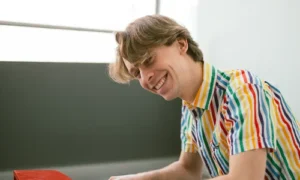
Baron Fenwick, pianist, is the winner of numerous prizes, awards, and honors. He is currently a student at The Juilliard School pursuing his Doctorate of Musical Arts, and he graduated with his Master’s and Bachelor’s degrees from Mannes School of Music. Among his recent collaborators include composers Julia Wolfe and Lowell Liebermann. He recently performed as a soloist with the Canton Symphony and the Chamber Orchestra of Southern Maryland in works by Gershwin, Rachmaninoff, and Shostakovich. His CD with violinist Isabella Li Lao will be released by Naxos Music. Originally from Boone, North Carolina, he lives in New York City where he keeps a busy performing and teaching schedule.
BEN ZAMORA
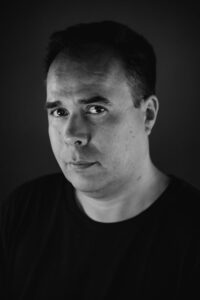
Ben Zamora is an American artist whose work is grounded in light and sculpture. He creates immersive installations and large-scale sculptural works that respond to the relationship between space, structure, and perception.
Zamora’s sculptures and installations have been presented at a wide range of creative and cultural venues, including the Park Avenue Armory in New York, the Coachella Valley Music and Arts Festival, Amsterdam Light Festival, Kunsthalle Krems in Austria, the Vienna Festival, Holland Festival, the Frye Art Museum, Suyama Space, and Cannonball Arts. In addition to these projects, his work has been exhibited in numerous galleries and is held in private collections and public art programs throughout the U.S. and internationally. His projects range from temporary installations to permanent public commissions that engage with local communities and landscapes.
He has also created sculptures and light-based installations for performance works, including collaborations with Kronos Quartet, Saint Genet, the Berlin Philharmonic, Barbican Centre in London, Deutsche Oper Berlin, Deutsches Symphonie-Orchester, and the Los Angeles Philharmonic. Over the last two decades, director Peter Sellars has been a key collaborator with Zamora.
Zamora’s work has been presented at Lincoln Center for the Performing Arts in New York, the Brisbane Festival in Australia, Donau Festival in Austria, Royal Festival Hall in London, Baltic Sea Festival in Stockholm, Helsinki Festival, Berliner Festspiele, Lucerne Festival in Switzerland, Le Grande Halle de La Villette in Paris, and The Getty Villa in Los Angeles.
BETSY AYER
Stage Manager Betsy Ayer’s previous projects with AMOC* include El Niño: Nativity Reimagined at the Cloisters and at the Cathedral of St. John the Divine in NYC, Eastman, El Cimarrón, Harawi, and The No One’s Rose. Recent projects with director Peter Sellars include Monochromatic Light (Afterlife), Park Avenue Armory; Idomeneo, Salzburg Festival; Only the Sound Remains, White Light Festival; andnumerous semi-staged productions with the San Francisco Symphony, Berlin Philharmonic, London Symphony Orchestra, andLos Angeles Philharmonic. Other recent premieres include Omar, Spoleto USA and Glass Handel, Opera Philadelphia. She has stage-managed for Brooklyn Academy of Music (BAM), New York City Opera. Dance stage management credits include: Four Quartets, Bard Summerscape and Barbican Centre, London; Trisha Brown Dance Company, FLEXN at the Park Avenue Armory/ International tour; New York City Ballet. Concerts: Interim Production Manager, Carnegie Hall. She is a graduate of Smith College.
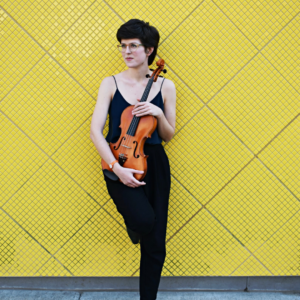
CARRIE FREY
Carrie Frey is a violist, improviser, and composer based in New York City. Frey is the violist of the Rhythm Method (“a group of individuals with distinct compositional voices and a collective vision for the future of the string quartet” – ICIYL) and a founding member of string trio Chartreuse and string quartet Desdemona. She has appeared with many of New York City’s notable new music groups, including Wet Ink Large Ensemble, AMOC*, Talea Ensemble, Wavefield, and International Contemporary Ensemble, and with Simone Baron’s genre-bending Arco Belo ensemble. Her compositions have been performed by the Rhythm Method, Adrianne Munden-Dixon, Kal Sugatski, and RE:duo. Her solo album Seagrass was released on Gold Bolus Records in December 2023. Carrie is a graduate of Oberlin Conservatory and the Manhattan School of Music Contemporary Performance Program and is currently pursuing a doctorate at the Graduate Center of the City University of New York.

DANIEL MCGREW
Daniel is a versatile performer of a broad range of repertoires spanning opera, early music, contemporary music, and music theatre. As a winner of the 2021 Young Concert Artist Auditions, he recently he and pianist, Sophia Zhou presented debut recitals at the Kennedy Center in Washington D.C. and Merkin Hall in New York City; McGrew and Zhou have also recently appeared with Buffalo Chamber Music Society, the Broman Concert Series at Mary Baldwin College, and Windsor Music in Boston. Recent concert engagements include performances with Elm City Consort, Bach Collegium Fort Wayne, and Music Worcester, among others.
Passionately engaged with new music, Daniel has premiered works by composers including Benjamin C.S. Boyle, Shawn Chang, Tom Cipullo, Reena Esmail, John Harbison, Robert Kyr, and Nina Shekhar. At Tanglewood’s renowned Festival of Contemporary Music, Daniel performed the role of Mortimer in the American premiere of George’s Benjamin’s Lessons in Love and Violence under the composer’s baton. Earlier at the same festival he gave a performance Kurtág’s Three Ancient Inscriptions the Boston Globe lauded as “viciously beautiful”; Classical Scene praised his “intense concentration,… clarity, and ferocity.”
No stranger to the operatic state, Daniel’s credits include: François in Bernstein’s A Quiet Place, Harlekin in Ullman’s Der Kaiser von Atlantis, Candide in Bernstein’s Candide, Orphée in Charpentier’s La descente d’Orphée aux enfers, Albert in Britten’s Albert Herring, Orfeo in Monteverdi’s L’Orfeo, Contino Belfiore in Mozart’s La finta giardiniera, Ecclitico in Haydn’s Il mondo della luna, and Toquemada in Ravel’s L’heure Espagnole. In summer 2022, Daniel participated in the premiere recording of Gerald Cohen’s “Steal a Pencil for Me” with Opera Colorado.
In the world of music theatre, Daniel participated in the symphonic premiere of James Lapine’s revue, Sondheim on Sondheim, with the Boston Pops Orchestra. He later joined Kate Baldwin, Liz Calloway, and other Broadway actors in David Loud’s, A Good Thing Going, for which his “most beautiful, longing-imbued tenor” was celebrated as “a find!” (Woman Around Town).
An early music specialist, Daniel has performed many of J.S. Bach’s major works and over 30 of the church cantatas with conductors including Matthew Halls, John Harbison, David Hill, Koji Otsuki, Kenneth Slowik, and Masaaki Suzuki. He has made multiple appearances with Gamut Bach Ensemble at the Philadelphia Chamber Music Society and the Bach Vespers series at Holy Trinity Lutheran. Additional memorable early music credits include Douce Dame: Woman and the Ars Nova, a program exploring women’s voices in the 14th century through the music of Guillaume de Machaut and Phillipe de Vitry with Elm City Consort; Bach’s B minor Mass at Alice Tully Hall; Bach’s Magnificat on tour throughout India; and the Monteverdi Vespers 1610 and Händel’s Occasional Oratorio in New York and New Haven. He twice attended the Bach Institute at Emmanuel Music in Boston.
The heart of Daniel’s musical passion and practice is the performance of song; he appears regularly with such ensembles as Brooklyn Art Song Society, New York Festival of Song, Mirror Visions Ensemble, and Cincinnati Song Initiative. Recent highlights from the recital stage include two performances of the complete Mörike-Liederbuch of Hugo Wolf with pianist, Martin Katz; the premiere of a new cycle by Tom Cipullo with tenor, Scott Murphree and pianist, Grant Wenaus; Killmayer’s settings of Heinrich Heine with pianist, Sam Martin; Beethoven’s An die ferne Geliebte with pianist, Ignat Solzhenitsyn; and Schumann’s Spanisches Liederspiel with pianist Jonathan Biss. In 2023, he and harpist, Parker Ramsey will tour with a recital of songs for tenor and harp.
Daniel holds degrees from Oberlin Conservatory, Yale University, and University of Michigan. He is a committed teacher and pedagogue, having taught studio voice, lyric dictions, and music history at University of Michigan, Oberlin Conservatory, Bowling Green State University, and Adrian College. He currently maintains a small private studio in Stamford, Connecticut.
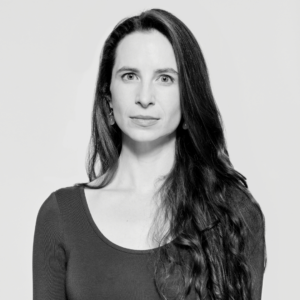
EMI FERGUSON
A 2023 recipient of the Avery Fisher Career Grant, Emi Ferguson can be heard live in concerts and festivals with groups including AMOC*, Ruckus, the Handel and Haydn Society, the New York New Music Ensemble, the Manhattan Chamber Players, and as the music director of Camerata Pacifica Baroque. Her recordings celebrate her fascination with reinvigorating music and instruments of the past for the present. Her debut album, Amour Cruel, an indie-pop song cycle inspired by the music of the 17th-century French court, was released by Arezzo Music in September 2017, spending four weeks on the classical, classical crossover, and world music Billboard charts. Her 2019 album Fly the Coop: Bach Sonatas and Preludes, a collaboration with continuo band Ruckus, debuted at #1 on the iTunes classical charts and #2 on the Billboard classical charts, and was called “blindingly impressive … a fizzing, daring display of personality and imagination” by The New York Times.
Emi has been a featured performer at the Marlboro, Lucerne, Ojai, Lake Champlain, Bach Virtuosi, and June in Buffalo festivals, often premiering new works by composers of our time. Emi was a featured performer alongside Yo-Yo Ma, Paul Simon, and James Taylor at the 10th Anniversary Memorial Ceremony of 9/11 at Ground Zero, where her performance of Amazing Grace was televised worldwide. Her performance that day is now part of the permanent collection at the 911 Museum. Emi has spoken and performed at several TEDx events and has been featured on media outlets including the Discovery Channel, Amazon Prime, WQXR, and Vox talking about how music relates to our world today. As a radio host and programmer, Emi first started working with New York’s WQXR as a member of their Artist Propulsion Lab where she developed the podcast series “This Composer Is Sick” with Max Fine, exploring the impact of Syphilis on composers Franz Schubert, Bedřich Smetana, and Scott Joplin. She one of four new hosts for WQXR’s Young Artists Showcase and the host of Once Upon A Composer, sharing musical stories with the youngest radio listeners. Her book Iconic Composers, co-written with Nicholas Csicsko alongside illustrations by David Lee Csicsko, introduces music lovers of all ages to 50 incredible Western Classical composers from the past 1000 years. Born in Japan and raised in London and Boston, she now resides in New York.
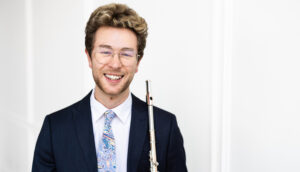
HUNTER O’BRIEN
Hunter O’Brien’s passionate musical approach has earned him top prizes in the Byron Hester, MTNA Young Artist, International Friedrich Kuhlau, Ervin Monroe, Yamaha Young Performing Artist, James Pappoutsakis, and New York Flute Club competitions. He currently serves as the Director of Education and Community Initiatives at DACAMERA. He holds a BM from the New England Conservatory as a Presidential Scholarship student of Paula Robison and a MM from the Shepherd School of Music at Rice University as a student of Leone Buyse. Hunter is honored to be recognized as a Wm. S. Haynes Flutes Young Artist.
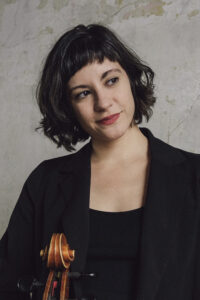
IVA CASIAN-LAKOS
Brooklyn-based cellist, singer, and improviser Iva Casian-Lakos is a versatile performer known for her “fiery cello playing” (David Lang via Sequenza 21) and for singing “with an exquisite fragility” (Christian Carey, Sequenza 21). Her repertoire ranges from classical to contemporary works involving choreography, acting, and improvisation. She has performed across the U.S., Mexico, and Europe with Bang on a Can All-Stars, American Modern Opera Company (AMOC), eco|tonal, PinkNoise, Synesthetic Project, and Unheard-of//Ensemble. In 2017 Iva co-founded Zagreb-based Ensemble Illyrica, who has been hailed for their “creative ecstasy, freshness, tonal harmony and rhythmic clarity” (Novi List). Illyrica has performed in major venues and festivals across Ireland, the Czech Republic, Austria, Slovenia, and Croatia, and released their first album on Hitchtone Music in 2022.
Iva has recently collaborated with legendary vocalist and composer Joan La Barbara on an upcoming album featuring a new work for singing-cellist, commissioned by Bang on a Can and performed at their inaugural Long Play Festival and Noguchi Museum series. She has also worked closely with composers Christopher Stark, Wang Lu, David Crowell, and Reiko Füting— and performs works of her own.
As an educator, Iva has given masterclasses, lectures, and workshops at colleges and festivals across the country, such as New York University, Oberlin Conservatory, Simons Center for Geometry and Physics, Miami University, New Directions Cello Festival, Lake George Music Festival, and more. She is on faculty at Vassar College and Musart Music.
Iva holds degrees from Stony Brook University (DMA.), New England Conservatory (M.M.) and Oberlin Conservatory (B.M.).
JACQUELINE KERROD
Classically trained from the age of 9, South African harpist Jacqueline Kerrod has worked at the highest level in the classical, pop, free jazz and improvised music worlds. Her debut solo record “17 Days In December” (2021) released on LA-based label Orenda Records was noted as a best debut in 2021 by The New York City Jazz Record and selected as an album to listen to by JazzIs Magazine (December 2021). She has toured nationally and internationally with composer and multi-reedist Anthony Braxton, both in duo and as part of his ZIM music ensemble. Their live duo recording was released on Italian label I dischi di Angelica (2020). She has played principal harp with top orchestras and performed with elite chamber groups, contemporary music ensembles, and pop superstars including Anohni, Rufus Wainwright and Kanye West. She recently launched an improvised/creative music series hosted by Morpeth Contemporary in downtown Hopewell, NJ. Featured musicians have included, Mariel Roberts, Ingrid Laubrock, Joe Morris, Ken Filiano, and Keir GoGwilt. Her duo with Joe Morris was released on Relative Pitch Records (Feb 2025)

JEFFREY STERN
Known for performing “with precision and an impressive attention to timbral detail” (Boston Musical Intelligencer), percussionist Jeff Stern has developed a voice to listen for in today’s contemporary music scene. He has performed extensively throughout the United States, Europe, and Asia, and has collaborated with and championed the work of a number of the world’s preeminent composers. Recent premieres include Alejandro Viñao’s Stress and Flow with The Percussion Collective, James Wood’s Secret Dialogues for solo marimba, and John Luther Adams’ Sila at Lincoln Center’s Out of Doors Festival. As a proponent for the music of our time, Jeff also actively commissions works by composers of his generation, such as Michael Laurello, Thomas Kotcheff, Emma O’Halloran, Robert Honstein, and Juri Seo.
Jeff is the executive director, co-artistic director, and founding percussionist of 2 piano/2 percussion group icarus Quartet. Winner of the 2019 Chamber Music Yellow Springs Competition, icarus is quickly gaining the attention of composers, presenters, and audiences everywhere. They have been artists in residence for programs including Chamber Music Northwest’s Protégé Project, the Vienna Summer Music Festival, Bowling Green State University’s Klinger ElectroAcoustic Residency, and the DMV Music Academy held at the Kennedy Center’s REACH. The Quartet’s debut commercial album, BIG THINGS, featuring the music of Michael Laurello, Brad Lubman, and Paul Lansky was released on Furious Artisans records in June 2022, receiving praise from the Wall Street Journal as “a beautifully immersive recording…an impressive calling card.”
With The Percussion Collective, Jeff has toured the United States, performed on a live broadcast for WXQR’s Midday Masterpieces, and given a featured evening performance at the Percussive Arts Society International Convention. He joined the Collective in March 2022 for Chris Theofanidis’ Drum Circles concerto for four percussionists with the Baltimore Symphony Orchestra under the baton of JoAnn Falletta, followed by two Drum Circles performances to open The Florida Orchestra’s 2023-24 season with resident music director, Michael Francis. With his various Collective colleagues, representing some of the brightest stars in modern percussion, Jeff has given two world premieres by Emmy Award-winning composer Garth Neustadter, two world premieres by Alejandro Viñao, and premieres of works for solo violin and percussion quartet by Ke-Chia Chen and Kenji Bunch at the Kennedy Center with virtuoso violinist Paul Huang.
Jeff is a frequent guest collaborator with new music ensembles around the country including NOVUS NY, Akropolis Reed Quintet (MI), Kaleidoscope Chamber Orchestra (CA), Mind on Fire (MD), NewPrism Ensemble (DC), NakedEye Ensemble (PA), and ensemble mise-en (NY), with whom he toured Hong Kong in 2018. He has appeared at the Yellow Barn Music Festival, Bang on a Can Summer Festival, Norfolk Chamber Music Festival, Lake George Music Festival, and the Eighth Blackbird Creative Lab, and can be heard on the Albany, Elm City, Bright Shiny Things, figureight, Furious Artisans, and Cantaloupe record labels.
In the 2024-25 season, Jeff will appear with icarus Quartet on the Secrest Artist Series in Winston-Salem, NC to premiere three companion works to Bartók’s Sonata for two pianos and percussion written expressly for iQ by Martin Bresnick, Viet Cuong, and Pulitzer Prize-winner Jennifer Higdon. He will also join The Percussion Collective to open the Phoenix Symphony’s season as concerto soloists in three performances with Colombian-American conductor Lina Gonzalez-Granados. Other 2024-25 season highlights include collaborations with AMOC* with conductor/composer Matthew Aucoin and MacArthur Genius director Peter Sellars, saxophone quartet Project Fusion, pianist Natalia Kazaryan and yMusic cellist Gabriel Cabezas, and Icelandic cosmic rock band Sigur Rós.
Jeff has served on the percussion faculty at the Peabody Institute of the Johns Hopkins University since 2017, and has taught at the Luzerne Music Center since 2022. He holds a B.M. from UMass Amherst, an M.M. from the Peabody Conservatory, where he was awarded the Harold Randolph Prize in Performance, and an Artist Diploma from the Yale School of Music. Jeff is a proud artist endorser of Vic Firth sticks and mallets, Zildjian cymbals, Evans drumheads, and Pearl/Adams drums and percussion.

JESSE CHRISTESON
Versatile cellist Jesse Christeson wears a number of musical hats around the country. Usually in the creative workshop with Boston-based Hub New Music, he also travels to serve as Principal Cellist of the Huntsville (AL) Symphony. He held the same position in the Mississippi Symphony for several years prior. Jesse is a founding member of the Inaugural Piano Trio in Jackson, MS, and also returns to collaborate with New JXN. In Boston, he can often be heard performing with start-ups Phoenix and Cape Cod Chamber Orchestra.
For several years Jesse was very active as a multi-faceted performer and teacher in Houston, TX. In addition to working as a freelance cellist, he performed as a vocalist in the Houston Grand Opera and Bach Society of Houston choruses. He taught a cello studio at the Rice Preparatory Program and local public schools.
Mr. Christeson has frequently spent summers performing at the Tanglewood Music Center, where he featured in the New Fromm Players and orchestra festival. His other summer engagements have included the festivals of Aspen, Brevard, and the National Orchestral Institute. Jesse received his MM from Rice University (studio of Norman Fischer), and his BM from Stetson University in DeLand, FL, where he studied cello (studio of David Bjella), voice, and philosophy.
JOSEPH JORDAN
A native of New York City, Joseph Jordan is both an oboist dedicated to the instrument’s prominence and longevity for future eras of music and a composer keenly interested in close encounters with the unique capabilities and phenomena of acoustic instruments. In 2023, he earned a master’s degree in oboe performance from The Juilliard School, where he studied with Elaine Douvas and received additional instruction from Linda Strommen, Nathan Hughes, and Scott Hostetler. Joe was praised for his “substantial musicality” (New York Classical Review) following a performance of Varèse’s Octandre with Joel Sachs and the New Juilliard Ensemble as part of the 2022 Focus Festival.
Before his graduate studies, Joe studied oboe at Juilliard as part of the Columbia-Juilliard Exchange. He received his bachelor’s degree from Columbia University, where he majored in philosophy and was privileged to study composition with Georg Friedrich Haas, George Lewis, Eric Wubbels, Zosha Di Castri, and others. During his studies, his work received premiere performances by the International Contemporary Ensemble, the Wet Ink Ensemble, loadbang, and counter)induction. The Columbia Department of Music awarded him the Douglas Moore Prize for outstanding work as an undergraduate composer following his junior year. As part of his fellowship with Ensemble Connect, Joe teaches at Edward R. Murrow High School in Brooklyn.
KARA LAMOURE
Kara LaMoure approaches her work as a bassoonist from many angles–as a performer, educator, creative, and chamber music specialist.
LaMoure is a founding member of the Breaking Winds Bassoon Quartet, a comedic crossover group known for their web presence and their following among young musicians. With the Breaking Winds, she has been a featured artist at the Beijing International Bassoon Festival, the International Double Reed Society conferences in New York, Tokyo, Granada, and Bangkok, and with community bands across the United States. The Breaking Winds have performed as concerto soloists with the West Point Band, Yale Concert Band, Northshore Concert Band, and the Eastman Wind Ensemble.
As an orchestral musician, LaMoure has performed with the New Zealand Symphony Orchestra and the Civic Orchestra of Chicago, and she can be heard on the original soundtrack to The Hobbit: The Desolation of Smaug. She also takes interest in global youth orchestra movements and has served as a coach for the Verbier Festival Junior Orchestra (Switzerland), YOA Honduras, Esperanza Azteca (Mexico), and Bahia Orchestra Project (Brazil).
LaMoure is a prolific arranger of chamber music for winds, and a selection of her arrangements and transcriptions for bassoon quartet are published by TrevCo Music Publishing. Her interest in the creation and curation of music has led to premieres of works for solo bassoon by Akshaya Avril Tucker and Adeliia Faizullina.
LaMoure earned degrees from the Eastman School of Music, where she studied under John Hunt, and Northwestern University, where she studied under Christopher Millard. She also holds certificates in arts leadership from the Eastman School of Music and the Global Leaders Program. She is currently an instructor in Eastman’s cutting-edge Institute for Music Leadership. LaMoure lives in New York City, and between performances, she can probably be found exploring her neighborhood on foot, dabbling in visual art, or listening to podcasts.

LAUREN RANDOLPH
Lauren Randolph is a New York based mezzo-soprano currently studying with Elizabeth Bishop at The Juilliard School where she is a recipient of the prestigious Kovner Fellowship. In 2025, at 24 years old, Randolph was recognized as a National Finalist in The Metropolitan Opera Eric and Dominique Laffont Competition.
Randolph’s recent operatic performances include Madame de Croissy in Poulenc’s Dialogues des Carmélites with Juilliard Opera and Grimgerde in Wagner’s Die Walküre with The Santa Fe Opera. An avid interpreter of Handel and Baroque opera, she has recently performed the roles of Amastre in Serse, Cornelia in Giulio Cesare, and Disinganno in Il Trionfo del Tempo e del Disinganno. Other appearances include La Zia Principessa in Puccini’s Suor Angelica, Florence Pike in Britten’s Albert Herring.
In addition to operatic repertoire, Randolph is a skilled concert soloist, having debuted as the Alto Soloist in Bach’s cantatas 40 and 110 with the Chicago Symphony Chorus in 2023. She has also performed as the mezzo-soprano soloist in the Duruflé Requiem, the alto soloist in J.S. Bach’s Ihr werdet weinen und heulen and Oster-Oratorium, Johann Schelle’s Gott, sende dein Licht, and Mozart’s Requiem.
MATTHEW AUCOIN
Matthew Aucoin is an American composer, conductor, and writer, and a 2018 MacArthur Fellow. He is a co-founder of the pathbreaking American Modern Opera Company (AMOC*), was the Los Angeles Opera’s Artist in Residence from 2016 to 2020, and currently serves as an Arnhold Creative Associate at The Juilliard School.
Aucoin’s orchestral and chamber music has been performed, commissioned, and recorded by such leading artists and ensembles as Yo-Yo Ma, the Philadelphia Orchestra, the Chicago Symphony, Zurich’s Tonhalle Orchestra, the BBC Scottish Symphony, the Los Angeles Chamber Orchestra, and the Brentano Quartet. In the summer of 2023, the MET Orchestra, conducted by Yannick Nézet-Séguin, featured Aucoin’s orchestral work “Heath” on its first European tour in several decades.
Aucoin is also well-known for his operas, which include Eurydice, Crossing, and Second Nature. These works have been produced at the Metropolitan Opera, the Los Angeles Opera, Brooklyn Academy of Music (BAM), Boston Lyric Opera, the Lyric Opera of Chicago, and the Canadian Opera Company, among others. The Metropolitan Opera’s recording of Eurydice was nominated for a Grammy in 2023.
Aucoin’s other recent conducting engagements include appearances with the Los Angeles Opera, Santa Fe Opera, Houston Grand Opera, Boston Lyric Opera, San Diego Symphony, Salzburg’s Mozarteum Orchestra, Ojai Music Festival, Philharmonia Baroque Orchestra, Rome Opera Orchestra, and many other ensembles. Aucoin’s book about opera, The Impossible Art: Adventures in Opera, was published in 2021 by Farrar, Straus, & Giroux. He has taught at Harvard University, and his essays regularly appear in leading publications such as The New York Review of Books and The Atlantic.
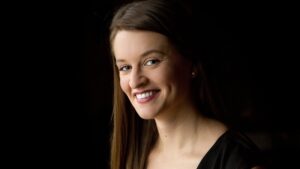
MEGAN MOORE
Megan Moore’s extensive work in contemporary music most recently includes premiering Heggie’s song cycle CROSSING BORDERS; singing Tan Dun’s Buddha Passion at Seattle Symphony with the composer on the podium; both performing in Brett Dean’s Hamlet and covering Jess in Tesori’s Grounded at the Metropolitan Opera; performing Matt Aucoin’s This Earth as well as Freya Waley-Cohen’s Spell Book Volume 2 with Orchestra of St. Luke’s; and creating the role of Ino in Corigliano’s The Lord of Cries at Santa Fe Opera. Other recent engagements include the title role in Ariodante at Boston Baroque, Rossini’s Stabat Mater at Municipal de Santiago; Rosina in Il Barbiere di Siviglia at Seattle Opera; Donna Elvira in Don Giovanni at San Diego Opera; Sesto in Handel’s Julius Caesar and Dorabella in Così fan tutte at Opera Theater of Saint Louis; recording Handel cantatas with The English Concert and Harry Bicket; performing Berlioz’ Les nuits d’été with The Orchestra Now; and singing Ida in Die Fledermaus with Les Musiciens du Louvre and Marc Minkowski. Next season Megan is glad to return to AMOC* and Opera Philadelphia for The Seasons.
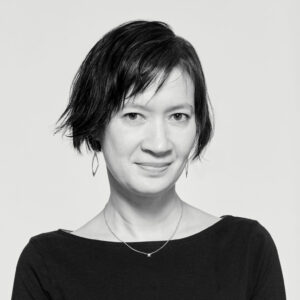
MIRANDA CUCKSON
A highly-acclaimed soloist and collaborator, violinist/violist Miranda Cuckson delights audiences with her performances of music ranging from older eras to the most current creations. She performs at venues ranging from Suntory Hall to the Berlin Philharmonie to the Teatro Colón and Cleveland Museum, the St. Paul Chamber Orchestra’s Liquid Music, and the Ojai, Wien Modern, Grafenegg, Time Spans, Marlboro, Bard, West Cork, Portland, LeGuessWho, and SinusTon festivals. Miranda made her Carnegie Hall debut playing Piston’s Violin Concerto No. 1 with the American Symphony Orchestra, and just recently made her debut at the Vienna Musiverein with the Haas Violin Concerto No. 2.
She has released ten lauded albums, including Nono’s La lontananza nostalgica utopica futura, named a Best Recording of the Year by the New York Times. Miranda is a member of AMOC* and founder/director of Nunc. She studied at Juilliard and teaches at Mannes School of Music.
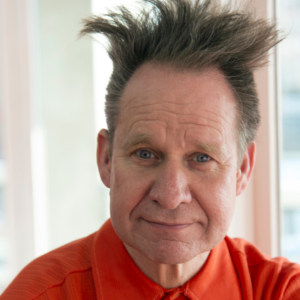
PETER SELLARS
Director Peter Sellarshas gained international renown for his groundbreaking and transformative interpretations of classics, advocacy of 20th-century and contemporary music, and collaborative projects. His work illuminates the power of art as a means of moral expression and social action.
He has staged operas at the Dutch National Opera, English National Opera, Festival d’Aix-en-Provence, Lyric Opera of Chicago, Opéra National de Paris, and the Salzburg Festival, among others. He has also collaborated on the creation and production of many works with composers John Adams and Kaija Saariaho.
Recent productions include Tyshawn Sorey’s Monochromatic Light (Afterlife) for the Park Avenue Armory (New York), Heinrich Schütz’s Musikalische Exequien with the Los Angeles Master Chorale, a revival of Tristan und Isolde at the Opera de Paris, and a staging of Sorey’s Perle Noire: Meditations for Josephine at the Dutch National Opera. Upcoming in 2023/24 are new productions of Marc-Antoine Charpentier’s Medee in Berlin and Vincenzo Bellini’s Beatrice di Tenda in Paris.
Sellars has led several major arts festivals, including the 1990 and 1993 Los Angeles Festivals and the 2002 Adelaide Arts Festival. In 2006 he was Artistic Director of New Crowned Hope, a festival in Vienna for which he invited emerging and established artists from diverse cultural backgrounds to create new work in the fields of music, theater, dance, film, the visual arts, and architecture for the celebration of Mozart’s 250th birthday anniversary. He served as the Music Director of the 2016 Ojai Music Festival.
Mr. Sellars is a Distinguished Professor in the Department of World Arts and Cultures at UCLA and the founding director of the Boethius Institute at UCLA. He is the recipient of a MacArthur Fellowship, Erasmus Prize for contributions to European culture, the Gish Prize, the Polar Music Prize, and is a member of the American Academy of Arts and Sciences
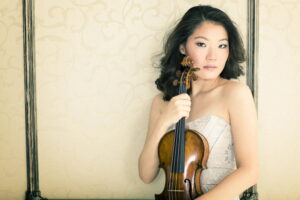
RACHEL LEE PRIDAY
A consistently exciting artist, renowned globally for her spectacular technique, sumptuous sound, deeply probing musicianship, and “irresistible panache” (Chicago Tribune), violinist RACHEL LEE PRIDAY has appeared as soloist with major international orchestras, among them the Chicago, Houston, National, Pacific, St. Louis and Seattle Symphony Orchestras, Boston Pops Orchestra, Buffalo Philharmonic Orchestra and Germany’s Staatskapelle Berlin. Her distinguished recital appearances have brought her to eminent venues, including Lincoln Center for the Performing Arts’ Mostly Mozart Festival, Chicago’s Ravinia Festival and Dame Myra Hess Memorial Series, Paris’s Musée du Louvre, Germany’s Mecklenburg-Vorpommern Festival and Switzerland’s Verbier Festival.
Passionately committed to new music and creating enriching community and global connections, Rachel Lee Priday’s wide-ranging repertoire and multidisciplinary collaborations reflect a deep fascination with literary and cultural narratives. Her work as soloist with the Asia / America New Music Institute promoted cultural exchange between Asia and the Americas, combining premiere performances with educational outreach in the US, China, and Vietnam. She has premiered and commissioned works by composers including Matthew Aucoin, Christopher Cerrone, Gabriella Smith, Timo Andres, Leilehua Lanzilotti, Cristina Spinei, Melia Watras, and Paul Wiancko. In 2022, she premiered a new Violin Concerto, “Kuyén,” written for her by Miguel Farías, which depicts the Moon in Mapuche mythology, with the UC Davis Symphony at the Mondavi Center.
Recent season highlights have included a duo recital with composer/pianist Timo Andres in Seattle and for the Phillips Collection, exploring the through-lines of American twentieth and twenty-first century violin and piano works, and a third tour of South Africa, where she appeared in recital and performed the José White Lafitte Concerto with the Johannesburg and Kwazulu-Natal Philharmonics. Upcoming and recent concerto engagements include the Portland Symphony, Springfield (MO) Symphony, Pensacola Symphony, Symphony San Jose, South Carolina Philharmonic, and Bangor Symphony.
Since making her orchestral debut at the Aspen Music Festival in 1997, Rachel has performed with numerous orchestras across the United States, including the Colorado Symphony, Alabama, Knoxville, Rockford, Annapolis, and New York Youth Symphonies. In Europe and in Asia, she has appeared at the Moritzburg Festival in Germany and with orchestras in Graz, Austria, Hong Kong, Singapore, and Korea, where she performed with the KBS Symphony, Seoul Philharmonic and Russian State Symphony Orchestra on tour. She has toured South Africa extensively, and has given recitals in the United Kingdom at the Universities of Birmingham and Cambridge.
Rachel Lee Priday began her violin studies at the age of four in Chicago, after she saw the sheep puppet Lamb Chop pretend to play the violin in “Lamb Chop’s Play-Along.” Shortly thereafter, she moved to New York City to study with the iconic pedagogue Dorothy DeLay at the Juilliard School. Her teachers and mentors include Itzhak Perlman, Catherine Cho, Won-Bin Yim, Robert Mann, and Miriam Fried. She holds a B.A. degree in English from Harvard University and an M.M. from the New England Conservatory. Since 2019, she serves on the faculty of University of Washington School of Music in Seattle as Assistant Professor of Violin.
Rachel Lee Priday has been profiled in The New Yorker, The Strad, Los Angeles Times and Family Circle. Her performances have been broadcast on major media outlets in the United States, Germany, Korea, South Africa and Brazil, including a televised concert in Rio de Janeiro, numerous appearances on Chicago’s WFMT and American Public Media’s “Performance Today.” She has also been featured on BBC Radio 3, the Disney Channel, “Fiddling for the Future” and “American Masters” on PBS, and the Grammy Awards.
She performs on a Giuseppe Guarneri violin (“filius Andreae”).
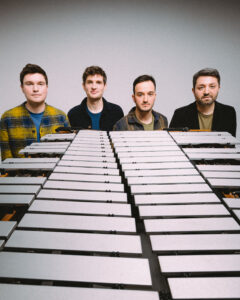
SANDBOX PERCUSSION
Described as “exhilarating” by The New York Times and “utterly mesmerizing” by The Guardian, the GRAMMY®-nominated ensemble Sandbox Percussion champions living composers through its unwavering dedication to contemporary chamber music. In 2011, Jonathan Allen, Victor Caccese, Ian Rosenbaum, and Terry Sweeney were brought together by their love of chamber music and the simple joy of playing together; they have since captivated audiences with performances that are both visually and aurally stunning. In 2024, Sandbox Percussion became the first percussion ensemble to be awarded the prestigious Avery Fisher Career Grant.
The 2021 album Seven Pillars, featuring Andy Akiho’s title piece, was nominated for two GRAMMY® awards. Following performances throughout the United States and Europe, Sandbox Percussion performs Seven Pillars in October at the Beijing Music Festival. They will also perform the piece at select dates throughout the 2024-25 season.
This season, Sandbox Percussion and the Tyshawn Sorey Trio collaborate on a special Max Roach tribute with live performances that include the 92nd Street Y and the Library of Congress. Together, the two groups explore the extraordinary legacy of jazz pioneer Max Roach, who was born 100 years ago.
Sandbox Percussion recently teamed up with composer Michael Torke, who created the hourlong piece BLOOM for the group. The world premiere of BLOOM will take place in December at Tishman Auditorium, at The New School, New York City, following the album release in August, via Ecstatic Records. In October, Sandbox Percussion performed at Boston’s Institute of Contemporary Art, collaborating with the London-based Gandini Juggling. Over the season, Sandbox Percussion will also perform music by Viet Cuong, Julius Eastman, Gabriel Kahane, Gabriella Smith, Paola Prestini, and Doug Cuomo.
Sandbox Percussion recently recorded percussion music for its first feature film: The Wild Robot (DreamWorks, 2024), an animated science fiction survival film with music by Kris Bowers. The first recording of Lifeline, a vibrant percussion quartet composed by Ellis Ludwig-Leone for Sandbox Percussion, will be released on the album Past Life / Lifeline in December, on Better Company Records. A new album celebrating the group’s long-standing collaboration with Christopher Cerrone will be released in February on PENTATONE Records, including the piece Ode To Joy, co-commissioned by the group in 2023.
Sandbox Percussion holds the positions of ensemble-in-residence and percussion faculty at the University of Missouri-Kansas City and The New School’s College of Performing Arts. Starting in 2024-25, Sandbox Percussion will also be on faculty at the Peabody Institute of the Johns Hopkins University.
Sandbox Percussion endorses Pearl/Adams musical instruments, Zildjian cymbals, Vic Firth sticks and mallets, Remo drumheads, and Black Swamp accessories.
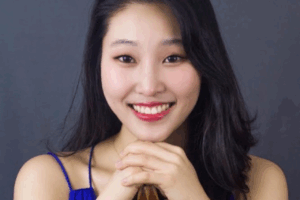
SONG HEE LEE
Korean Soprano Song Hee Lee is an Artist Diploma candidate at The Juilliard School, studying under Darrell Babidge. In the summer of 2025, she will make her debuts at Lincoln Center and Tanglewood in Matthew Aucoin’s Music for New Bodies directed by Peter Sellars. In the 2025/26 season, she will debut with Les Arts Florissants in concerts led by William Christie in Paris, Versailles, and Madrid. Additional concert engagements include her debut with the Cecilia Chorus of New York in Handel’s Messiah at Carnegie Hall and with the American Classical Orchestra in Mozart’s Exsultate, jubilate. On the operatic stage, she will debut with North Carolina Opera in Cendrillon (La Fée). Future seasons include her debut with il Pomo d’Oro on a North American tour with Joyce DiDonato.
Last season, Song Hee starred as Cleopatra in R.B. Schlather’s new production of Giulio Cesare at Hudson Hall, performed with early music ensemble Ruckus. She also appeared with Juilliard415 in a program of Handel and Rameau arias conducted by William Christie, with The Juilliard Orchestra in Ravel’s L’enfant et les sortilèges (La Princesse) led by Louis Langrée, and with the Boston Youth Symphony Orchestra in scenes from Der Rosenkavalier (Sophie). As a second-year Master’s student at Juilliard, Song Hee appeared as Aldimira in Cavalli’s L’Erismena and Valentina in John Musto’s Later the Same Evening, both conducted by Joseph Colaneri with Juilliard Opera. She also performed with Juilliard415 in Purcell’s King Arthur. She has worked with esteemed conductors including Lionel Meunier, Richard Egarr, Nicholas McGegan, Daniela Candillari, and William Christie across multiple seasons.
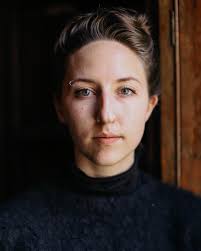
VICTORIA BEK
Victoria Bek is a NY based Costume Artist. Her work maintains a multifaceted approach through design, construction, and collaborative curation. Victoria works regionally and internationally in Dance, Theater, Opera, and Interdisciplinary Performance Art. Her recent collaborations include the Park Avenue Armory, Twyla Tharp Dance, Opera Philadelphia, The Juilliard School, The Shed, L.A. Dance Project, AMOC*, Philharmonia Baroque Orchestra, Gibney Company, New York Philharmonic, Oregon Ballet Theater, BODYTRAFFIC , Little Island and more.

WILLIAM SOCOLOF
William Socolof is an award-winning operatic bass-baritone and recitalist. He has appeared as a soloist with many premier North American orchestras including the Boston Symphony Orchestra, National Symphony Orchestra, New York Philharmonic, and Philharmonia Baroque Orchestra amongst others. He was a winner of the 2020 YCA Susan Wadsworth International Auditions.
The New York native was graduated from The Juilliard School in spring 2022 with an Artist Diploma in Opera Studies and was awarded The Stephen Novick Grant for Career Advancement. Thereafter, he attended the prestigious Merola Opera Program at San Francisco Opera, singing Riolobo in selections from Daniel Catán’s Florencia en el Amazonas, as well as operatic scenes of Mozart and Berlioz with the San Francisco Opera Orchestra.
William Socolof joins Oper Köln’s Opernstudio from autumn 2023 and his diverse range of performances of the season include Die Bremer Stadtmusikanten by Attila Kadri Şendil, Romeo und Julia by Boris Blacher, Tosca, Pünktchen und Aton by Iván Eröd, Un Ballo in Maschera, and L’incoronazione di Poppea.
William Socolof debuted with the National Symphony Orchestra in Bernstein’s Mass led by James Gaffigan and recent performance highlights also include Vaughan Williams’ Sir John in Love with Leon Botstein and the American Symphony Orchestra at the Bard Music Festival, Beethoven’s Choral Fantasy, Op. 80 with the Boston Symphony Orchestra and Music Director Andris Nelsons, Barber’s Dover Beach, Op. 3 with the Borromeo String Quartet at Carnegie Hall, and performances with Philharmonia Baroque Orchestra under the auspices of The Kennedy Center, Carnegie Hall, and the Philadelphia Chamber Music Society in collaboration with Barbara Hannigan and Richard Egarr.
Operatic appearances have included Don Alfonso in Così fan tutte at Juilliard in a production conducted by alumnus Nimrod David Pfeffer and directed by David Paul, Satiro and Plutone in Mary Birnbaum’s production of the rarely performed L’Orfeo by Salamone Rossi, as well as the role of Daniel Webster in Virgil Thomson’s The Mother of Us All at the Metropolitan Museum of Art as a part of Project 19, the New York Philharmonic’s multi-season initiative marking the centennial of the 19th Amendment, which guarantees women the right to vote in the United States.
During the summers of 2019, 2020, and 2021, he was a resident artist at the storied Marlboro Music Festival and performed extensively works of Bach, Brahms, Mahler, and Schubert with pianists Jonathan Biss, Malcolm Martineau, and Mitsuko Uchida. A fellow at the Tanglewood Music Festival in the summer of 2018, and under the tutelage of Sanford Sylvan, Dawn Upshaw, and Stephanie Blythe, William Socolof appeared with the Boston Pops, performed Bach Cantatas conducted by John Harbison, and premiered works by Michael Gandolfi and Nico Muhly in partnershipwith pianist Emmanuel Ax.
William Socolof has received prizes from The Naumburg Foundation, Young Concert Artists, International Auditions, Oratorio Society of New York Lynn Woodside Competition, and the Metropolitan Opera National Council Laffont Competition. He is a graduate of The Juilliard School (B.M.’18, M.M.’20, ADOS ‘22) studying with Sanford Sylvan and William Burden.
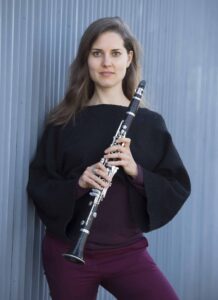
YASMINA SPIEGELBERG
Hailed for her “enchanting” performances (New York Classical Review), her “lambent tone and persuasive phrasing” (Oberon’s Grove), Swiss-French clarinetist Yasmina Spiegelberg is the laureate of several international and national competitions including the Rotary International Competition Madrid Velazquez, the Frances Walton Seattle Competition, and the USC Concerto Competition. Additionally, she was awarded the Special Prize at the 2nd Vienna International Music Competition, and the Golden Medal at the 4th Manhattan International Music Competition. Her former clarinet trio, The Tandru Trio, was the winner at the Beverly Hills National Auditions in 2019. With her woodwind quintet, ConnectFive, she was an Ensemble Forward Grantee through Chamber Music America.
Based in NYC, she is an alum of Ensemble Connect, the resident ensemble of Carnegie Hall, which features extraordinary young musicians from around the globe who are committed to community engagement, teaching, entrepreneurship, and leadership. She has appeared in many renowned concert halls including the Oslo Concert Hall, the Concertgebouw in Amsterdam, Merkin Hall, and Carnegie Hall.
Yasmina was a guest soloist with the Norwegian Chamber Orchestra, Nomad Symphony Orchestra (France), String Ensemble Rapsodia (Switzerland), USC Thornton Edge, and USC Thornton Symphony Orchestra. She has been broadcasted live as a soloist on KUSC (California) and KING-FM (Washington) and she recorded an album in Switzerland featuring concertos and other works for clarinet and orchestra. She has collaborated with conductors such as Stefan Asbury, Richard Egarr, Franck Ollu, Paul Watkins, and Xiao Zhang.
She has appeared at Avaloch Farm Music Institute, the Bridgehampton Chamber Music Festival, Caramoor, Chelsea Music Festival, Festival POTE (France), GatherNYC, International Ensemble Modern Academy (Austria), Philadelphia Chamber Music Society, Rocket City New Music, TIME:SPANS Festival, Yellowbarn, and with renowned ensembles such as A Far Cry, American Modern Opera Company (AMOC), Argento New Music Project, New Jersey Symphony Orchestra, On Site Opera, and Orpheus Chamber Orchestra. Yasmina is a core member and co-founder of Trio Phōs, a NYC-based clarinet trio. She’s also the Principal Clarinetist of Pegasus: The Orchestra and the Chamber Orchestra of New York, as well as the Clarinetist of the Paragon Ragtime Orchestra. She was a designated substitute on the Broadway Show Camelot. Her chamber music collaborations include Natasha Brofsky, Peter Frankl, Clive Greensmith, Thomas Guei, Peter Kolkay, Cynthia Phelps, Hila Plitmann, Mark Steinberg, and Roger Tapping. A passionate advocate of contemporary classical music, she collaborates with composers Kalevi Aho, Reena Esmail, inti figgis-vizueta, Liza Lim, James MacMillan, and Michi Wiancko.
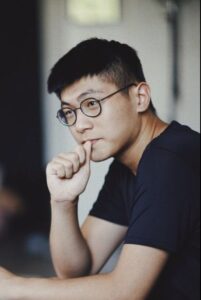
YIBIN WANG
Yibin Wang is a New York-based theater and performance director from Hangzhou, China. Yibin’s interdisciplinary work explores cross-cultural narratives, communal experiences, new technology, and vibrant audience relationships. His recent directing/curatorial projects include Tongues (multiple venues), Cabin (East Village Basement), A Hunger Artist (Lenfest Center for the Arts), A Tree Has Not Yet Woken Up In A Dream (Beijing Fringe Festival), Playdate (En Garde Arts), A Theater Letter To You (Columbia University), The Vanya Project (Columbia University), Designing Care (Hangzhou Fengshan Community). Recent assistant credits include Music For New Bodies, Médée, This Body Is So Permanent… (dir. Peter Sellars); The Following Evening (Production Assistant, dir. 600 Highwaymen); Promenade (dir. Morgan Green). BA, Bard College; MFA in Directing, Columbia University. He is currently an artist-in-residence at the Performance Project @ University Settlement in New York, working on a project that delves into the Asian community’s diverse diaspora experiences through the lens of native languages.
Reference Guide
A novelist, short-story writer, poet, essayist, and diplomat who was probably the most important Mexican woman writer of the 20th century. She was deeply compelled by the writings of Spanish 16th Century religious activist and author Saint Teresa of Avila and Sor Juana Ines de la Cruz. Learn more.
Written in 1950, this was an early collection of poems by Castellanos
A 2nd Century apocryphal text not appearing in the King James Bible or modern Reina Valera Bible, the Protevangelical Gospel of St. James tells the story of the birth, childhood, and early adolescence of Mary, mother of Jesus. The text featured in El Niño is drawn from Chapter 17. Read the full text here.
The primary English translation of the Old and New Testaments in current use. It was made in 1604—by a commission brought together by King James—in response to issues with earlier English language translations developed in the prior century.
Initially translated by former Catholic Monk Casiodoro de Reina in 1569 and revised by his student Cipriano de Valera in 1602, the Reina Valera Bible is the common Spanish-language translation of the bible used by Spanish-speaking protestants.
Living in Mexico in the 17th century, Sor Juana was a poet, dramatist, scholar, and nun, an outstanding writer of the Latin American colonial period and of the Hispanic Baroque. Learn more.
The Nicaraguan poet— who lived from 1867-1916 —is credited with initiating the Spanish-language literary movement of “modernismo” in the late 19th century. Learn more.
On October 2, 1968 in the Tlatelolco section of Mexico City, the Mexican Armed Forces opened fire on a group of unarmed civilians in the Plaza de las Tres Culturas who were protesting the upcoming 1968 Summer Olympics. 300 people —most of them students—were killed. Learn more.
Aztec goddess who represented sexual impurity and sinful behavior. Learn more.
The Gospel of Pseudo-Matthew (Ps. -Mt.) is one of the most important witnesses in the Latin West to apocryphal stories about the lives of Mary, Joseph, Jesus, and Mary’s parents, Anna and Joachim. Learn more.
A collection of Rosario Castellanos poems, El rescate del mundo (The Ransom of the World), was published in 1952; these are short, spare poems that provide rare descriptive tributes to indigenous women and their work. Learn More.
“…elevated an already-revisionist work into something much more powerful”
The New York Times
Upcoming tour performances:
December 21, 2023 at Cathedral of St. John the Divine, New York, NY. Learn More